Hearing Again for the First Time: How Lutheran Worship Is Forming Listeners in an Age of Noise

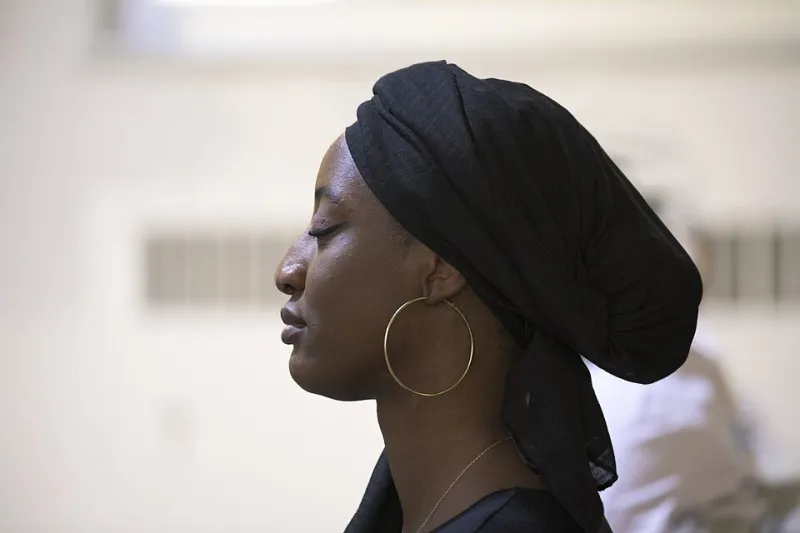
Photo: Minogue, Anna Catherine, b. 1874, No restrictions, via Wikimedia Commons
There is a moment, somewhere between the opening hymn and the first reading, when something shifts. The phone in your pocket stops mattering. The unread emails, the half-finished to-do list, the low hum of ambient anxiety that follows most Americans from bed to desk to bed again — it all recedes, just slightly, into the background. For members of First Lutheran OKC, that moment is not accidental. It is, in fact, the entire point.
In an era when the average American touches their smartphone more than two thousand times per day, and when the concept of sustained attention has become something of a cultural casualty, the ancient rhythms of Lutheran liturgy are functioning as a kind of spiritual counterweight. The structured movements of worship — the call and response, the communal silences, the deliberate pacing of confession and absolution, of reading and proclamation — are quietly forming something that our distracted world has nearly forgotten how to do: listen.
The Architecture of Attention
Lutheran worship is not passive. Anyone who has sat through a traditional Divine Service knows that the congregation is asked, repeatedly, to respond. The pastor speaks; the people answer. A versicle is offered; a response is sung. Confession is made; absolution is declared. This back-and-forth is not merely ceremonial. It is, at its core, a training ground for a particular kind of attentiveness.
"The liturgy doesn't let you zone out," says Margaret Holloway, a longtime member of First Lutheran OKC who works as a high school counselor in the Oklahoma City metro area. "You have to be present enough to know when it's your turn. And once you're in that rhythm, something happens. You start actually hearing the words — not just reciting them."
That distinction — between recitation and reception — is one that the congregation's pastoral leadership takes seriously. The liturgy, as it is practiced at First Lutheran OKC, is designed not simply to move worshippers through a sequence of events but to cultivate in them a posture of receptivity. The words of the Kyrie, the Gloria, the Creed — spoken and sung week after week — are meant to settle into the body and the memory, so that they become available in moments when the spirit needs them most.
Silence as Spiritual Practice
Perhaps nowhere is the countercultural nature of Lutheran worship more apparent than in its use of silence. In a media environment engineered to eliminate every pause — where streaming services auto-play the next episode, where social media feeds refresh endlessly, where even elevators pipe in sound to fill the quiet — the deliberate silences built into the liturgy can feel almost shocking.
At First Lutheran OKC, those silences are protected. After the reading of Scripture, there is a pause. After the sermon, there is space. After the distribution of Communion, the congregation is invited to sit in stillness before the post-Communion prayer begins.
"The first time I really noticed the silence, I didn't know what to do with it," admits David Reyes, a software developer who began attending First Lutheran OKC three years ago after a long absence from church. "I kept waiting for something to fill it. But eventually I realized — the silence is the thing. It's where I actually process what I've just heard."
This is not incidental to Lutheran theological conviction. The Reformation inheritance that First Lutheran OKC carries insists that the Word of God is active and living — that it does something to the person who receives it. But reception requires space. It requires the kind of interior quiet that silence, practiced repeatedly in community, begins to create.
Learning to Listen to Each Other
What happens inside the sanctuary does not stay there. Congregants at First Lutheran OKC report that the listening habits formed in worship have begun to reshape their relationships outside of it.
Carolyn Dietz, a retired nurse and member of First Lutheran's women's Bible study, describes a change she noticed in herself after several years of consistent liturgical worship. "I used to be a fixer," she says. "Someone would share a problem and I'd immediately start problem-solving. But the liturgy taught me to wait. To let someone finish speaking before I respond. To sit with what they've said before I rush to answer."
The connection she draws is intuitive but theologically grounded. The call-and-response structure of Lutheran worship is, at its heart, a practice in not speaking before it is time — in honoring the rhythm of the other person's voice before offering your own. Applied to human relationships, that practice looks remarkably like the kind of deep listening that therapists, counselors, and communication researchers have long identified as foundational to genuine connection.
"We live in a culture of reaction," notes one of the pastoral staff at First Lutheran OKC. "Everyone is composing their response before the other person has finished speaking. The liturgy interrupts that. It trains you, week by week, to receive before you reply."
The Body Remembers
One of the features of Lutheran liturgy that distinguishes it from more informal worship styles is its physicality. Congregants stand, sit, and kneel at specific moments. They make the sign of the cross. They process forward to receive the sacrament. These bodily movements are not decorative — they engage the whole person in the act of worship, anchoring attention in the physical present.
For many members of First Lutheran OKC, this embodied dimension of the liturgy has proven particularly significant in an age when so much of life is mediated through screens. "When I stand for the Gospel reading, my body knows something important is happening," says Marcus Webb, a graduate student at the University of Oklahoma who drives into Oklahoma City for Sunday worship. "It's like a signal to my whole self — not just my brain — to pay attention."
Neuroscientists have increasingly recognized what liturgical traditions have long practiced: that the body plays a central role in shaping attention and memory. Repeated physical gestures associated with meaningful content help encode that content more deeply. The Lutheran liturgy, in this sense, is not simply a form of worship — it is a technology of formation, one that works on and through the body to cultivate a more attentive human being.
Presence as a Gift We Give
There is something quietly generous about the kind of presence that liturgical worship forms. To be truly attentive — to God, to the words of Scripture, to the person beside you in the pew — is to offer that person something increasingly rare: your undivided attention. In a world where attention has become a commodity extracted by algorithms, choosing to give it freely is, in its own way, a form of love.
First Lutheran OKC is not naive about the difficulty of sustaining that kind of presence beyond Sunday morning. The pull of distraction is real, and the liturgy is not a magic cure. But week after week, the congregation gathers again — to practice the ancient rhythms, to respond when called, to wait in the silence, to receive before they reply.
And in that repetition, something is being formed. Slowly, almost imperceptibly, the art of listening is being recovered — one service, one silence, one response at a time.