Formed in the Waiting: Why First Lutheran OKC Treats Patience as a Spiritual Practice, Not a Personality Trait

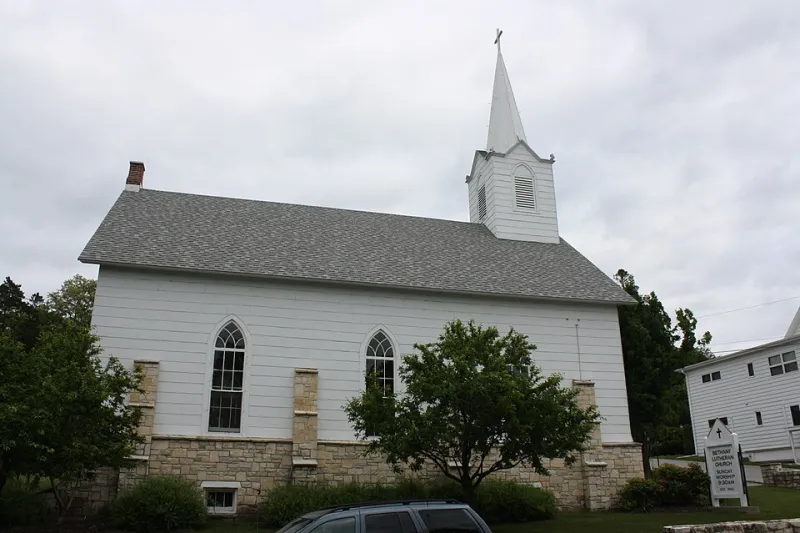
Photo: PattayaPatrol, CC BY-SA 4.0, via Wikimedia Commons
There is a particular kind of discomfort that arrives when nothing arrives. No answer. No resolution. No clear next step. In the American cultural imagination, that discomfort is treated as a problem to be solved—a gap to be filled with productivity, distraction, or the next available upgrade. But at First Lutheran OKC, that discomfort is being reimagined as something far more significant: an invitation.
The congregation has spent considerable energy in recent years recovering what might be called the theology of waiting—a framework rooted in Lutheran tradition and Scripture that treats the experience of holy expectation not as spiritual stagnation, but as one of the most formative postures a believer can inhabit.
A Culture That Cannot Sit Still
To understand why this emphasis feels countercultural, one need only observe the rhythms of daily life in Oklahoma City. Same-day delivery. Instant streaming. Algorithms designed to anticipate desire before it is fully formed. The architecture of modern life has been deliberately engineered to collapse the distance between want and fulfillment.
The church, by contrast, operates on a fundamentally different logic—one that insists some things cannot and should not be rushed.
"We live in a moment where waiting feels like failure," one long-time First Lutheran congregant reflected. "If you're waiting, the assumption is that you haven't tried hard enough, or that something has gone wrong. But the tradition tells us something very different. It tells us that waiting can be the very place where God is most at work."
That distinction—between waiting as absence and waiting as active formation—sits at the heart of how First Lutheran OKC approaches this often-overlooked dimension of the spiritual life.
What Advent Actually Teaches
For many American Christians, Advent has been quietly absorbed into the broader cultural calendar of holiday preparation. Decorations go up. Carols begin. The season becomes less about expectation and more about acceleration.
First Lutheran OKC has worked deliberately to resist that drift. The congregation's Advent observance is structured around a theology of intentional restraint—a liturgical insistence that Christmas is not yet here, and that the space before arrival carries its own sacred weight.
The four weeks of Advent, in Lutheran practice, are not merely a countdown. They are a re-enactment of the long human ache for redemption—the centuries of prophetic longing, the silence between promise and fulfillment, the posture of a people learning to hold hope without demanding it on their own timeline.
"Advent teaches us that God is not late," a member of the congregation's worship team explained. "It teaches us that our sense of urgency is not the measure of divine faithfulness. That is a genuinely difficult lesson for most of us, and it takes the whole season to begin learning it."
The practice of lighting the Advent wreath week by week—adding one candle at a time, letting the darkness remain present even as the light slowly grows—functions as a kind of embodied theology. The body learns what the mind resists: that light comes gradually, and that the gradual coming is itself a gift.
Between Petition and Answer
Beyond the liturgical calendar, the theology of waiting confronts First Lutheran's congregants in one of the most intimate and sometimes agonizing dimensions of faith: prayer.
Many who have prayed earnestly and at length know the particular weight of what might be called the unanswered interval—the space between a sincere petition and any discernible response. In a culture that treats silence as a malfunction, that interval can feel like abandonment. The Lutheran tradition, however, offers a different reading.
Drawing on the Psalms—those ancient prayers that alternate freely between lament, protest, and trust—First Lutheran OKC has sought to cultivate what its pastoral leadership describes as a theology of honest expectation. Prayer, in this framework, is not a mechanism for producing outcomes on demand. It is a relationship, and relationships require the willingness to remain present even when the other party has not yet spoken.
One congregant, who asked to remain anonymous, shared her experience of praying through a prolonged period of medical uncertainty in her family. "I wanted an answer. I wanted it immediately. And the church didn't pretend that was wrong to want. But what I found, through the liturgy and through the community, was that staying in the prayer—even when nothing seemed to be happening—was doing something to me. I was being changed by the waiting itself."
That testimony reflects something theologians have long observed: that the discipline of waiting is not passive. It is, in fact, one of the most demanding forms of spiritual activity, requiring the sustained surrender of control that much of modern life is designed to prevent.
Luther's Theology and the Long Arc
Martin Luther himself wrote with characteristic directness about the tension between human impatience and divine timing. His understanding of the theology of the cross—that God is often found precisely where human expectation would least look for him, in suffering, in hiddenness, in apparent absence—provides a theological foundation for taking waiting seriously.
The God revealed in Luther's theology does not operate on the schedules that human urgency prefers. The cross itself is the supreme instance of this: a moment that looked, by every available measure, like catastrophic failure, and which was, in fact, the hinge of history. The resurrection did not come immediately. Saturday intervened.
First Lutheran OKC has drawn on that tradition to help its congregation understand their own seasons of Saturday—those in-between times when the worst has happened and the best has not yet arrived, when faith is less a feeling than a decision to remain.
Practical Formation for Impatient People
Recognizing that theology alone does not produce transformation, First Lutheran OKC has developed several practical rhythms intended to form its members in the discipline of waiting.
The congregation's small group ministry has incorporated extended periods of silence into its gatherings—not as an absence of content, but as a deliberate practice of learning to be present without filling every moment with words. Members report that even five minutes of shared silence, held within a community of trust, begins to reshape one's relationship with discomfort.
Additionally, the church's approach to pastoral care explicitly honors the seasons of waiting that congregants bring with them. Rather than rushing toward resolution or premature comfort, First Lutheran's pastoral team has been trained to sit with people in their uncertainty—to resist the impulse to explain or accelerate, and instead to offer presence as its own form of ministry.
"Sometimes the most faithful thing we can do is simply not leave," one pastoral staff member noted. "Waiting alongside someone is an act of love. It says: this matters enough to stay."
The Gift Hidden in the Gap
There is, the congregation has found, something unexpected on the other side of learning to wait. Not that the answers always come, or that the circumstances always resolve in the ways hoped for. But that the person doing the waiting is, in some quiet and essential way, different for having waited.
Patience, in the Lutheran theological imagination, is not a personality trait distributed unevenly at birth. It is a discipline—something cultivated through practice, sustained by community, and grounded in a trust that the God who makes promises is the God who keeps them, even when the keeping takes longer than we would choose.
In a city and a culture moving at relentless speed, First Lutheran OKC is making a quiet, countercultural claim: that the spaces between are not empty. That waiting, held in faith, is itself a form of faithfulness. And that the soul formed in expectation is a soul being shaped, slowly and surely, into something it could not have become in a hurry.