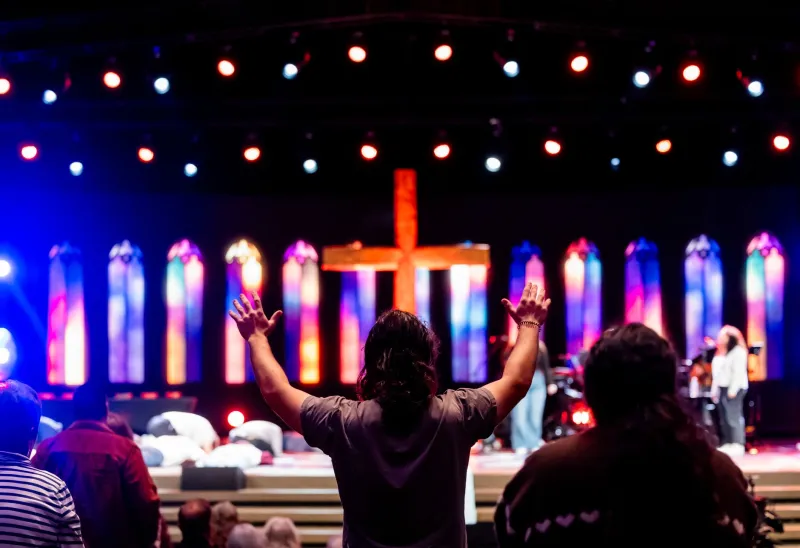
Enough Is a Theological Statement: First Lutheran OKC's Case Against the Prosperity Gospel
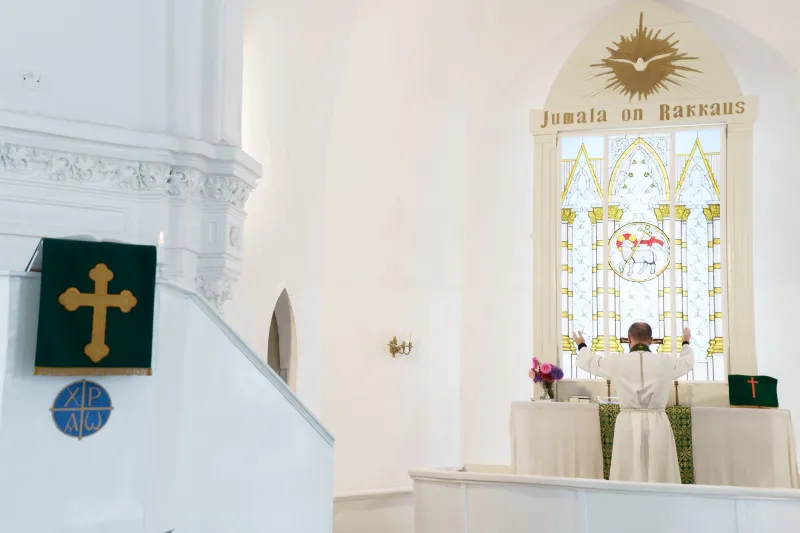
A Gospel That Doesn't Promise a Parking Spot
There is a version of Christianity being preached across American airwaves, stadium churches, and social media feeds that sounds, at first, deeply appealing. It promises that faithful living will be rewarded with material abundance — that God desires His people to be wealthy, healthy, and visibly blessed. Proponents speak of 'seed faith,' of claiming prosperity, of divine favor manifesting as a promotion, a new home, or a debt erased overnight.
At First Lutheran OKC, the response to this movement is not contempt. It is something more considered — and ultimately more demanding.
"We take the prosperity gospel seriously enough to disagree with it carefully," says one longtime member of the congregation. "It's not that God doesn't care about our material lives. It's that the framework gets the relationship between faith and flourishing exactly backwards."
That careful disagreement is rooted in centuries of Lutheran theological reflection — and it is becoming increasingly urgent as prosperity theology moves from the fringes of American Christianity toward its mainstream center.
What Luther Actually Said About Wealth
Martin Luther was not a romantic about poverty. He did not teach that suffering was inherently holy or that material comfort was spiritually suspect. What he did teach — with characteristic bluntness — was that the human heart is an idol factory, endlessly capable of turning good things into ultimate things.
In his explanation of the First Commandment in the Large Catechism, Luther wrote that whatever a person trusts in most deeply, that is their god. Wealth, in this framing, is not evil. But wealth as a sign of divine favor — wealth as proof that one's faith is working — becomes something else entirely. It becomes a competing altar.
Luther's theology of the cross, developed in contrast to what he called a "theology of glory," insists that God is most fully revealed not in triumph and abundance but in suffering, hiddenness, and the ordinary. The cross is not a setback on the way to prosperity. It is the center of the story.
This is not a comfortable message. It is, however, a coherent one — and it is the theological inheritance that First Lutheran OKC continues to pass on.
The Doctrine of Enough
If prosperity theology is built on the premise that more is always better and that abundance signals blessing, Lutheran theology offers a pointed counter-claim: enough is a theological category.
The Hebrew word dayenu — familiar from the Passover Seder, meaning "it would have been sufficient" — captures something essential about the posture Lutheran worship cultivates. Gratitude is not the emotion of those who have everything they wanted. It is the discipline of those who have learned to see what they already hold.
Pastor and congregants at First Lutheran OKC regularly return to Philippians 4:11-12, in which Paul writes that he has learned — note the verb — to be content in all circumstances. Contentment, in this reading, is not a personality trait or a fortunate temperament. It is an acquired practice, a spiritual discipline forged through attention and community.
"I spent years chasing the version of success I thought God owed me," shares one congregation member, a small business owner who joined First Lutheran OKC after leaving a prosperity-oriented church. "When it didn't come, I assumed I'd done something wrong spiritually. It took years of sitting in Lutheran liturgy to understand that the promise was never what I thought it was."
Stewardship as a Counter-Liturgy
One of the most concrete ways First Lutheran OKC challenges prosperity thinking is through its approach to stewardship — a word that in many American churches has become synonymous with fundraising campaigns and pledge drives.
At First Lutheran, stewardship is treated as a full theological concept: the recognition that nothing we hold is ultimately ours, and that our management of resources — financial, relational, environmental — is an act of worship. Giving, in this framework, is not a seed planted to yield a divine return. It is a confession: a declaration that our security does not rest in accumulation.
The congregation's outreach programs reflect this conviction in practical terms. Members participate in food distribution, housing advocacy, and refugee resettlement — not as spiritual investments designed to generate blessing, but as extensions of a grace they understand themselves to have already received in full.
"The question we try to ask," notes one member involved in the church's community programs, "is not 'what will this do for me' but 'what has already been done for us, and how does that change how we live?' That reorients everything."
Why This Message Is Countercultural — and Necessary
In an American economy structured around perpetual growth, in a media environment monetized by manufactured desire, and in a therapeutic culture that frames every want as a need, the Lutheran insistence on sufficiency is genuinely radical.
It does not make for viral content. It does not fill arenas. But it does something those arenas rarely accomplish: it offers people a stable place to stand when the promises of abundance inevitably fail to deliver.
For the congregation member facing a cancer diagnosis, the prosperity framework becomes a source of shame — evidence that their faith was insufficient. For the family navigating financial hardship, the suggestion that poverty signals spiritual failure compounds an already devastating season.
Lutheran theology, by contrast, meets people where they are. It does not explain suffering away. It does not promise that faithfulness will make life easier. What it offers instead is the strange, durable comfort of a God who entered suffering rather than bypassing it — and who declares, from within that suffering, that it is enough.
At First Lutheran OKC, that declaration is rehearsed every Sunday in liturgy, in the words of confession and absolution, in the sharing of bread and wine. It is a quiet rebellion against a louder gospel — and for those who have ears to hear it, it sounds like freedom.