Restored, Not Erased: First Lutheran OKC and the Radical Grace That Rewrites What Cancellation Cannot

There is a particular cruelty embedded in the architecture of the modern internet. A mistake made at twenty-three can surface at forty-five. A public failure — whether a reckless social media post, a criminal record, or a very public unraveling — does not simply fade with time. It persists, searchable and timestamped, quietly following a person from job application to first date to family reunion. The cultural reflex that has grown alongside this permanence is equally unforgiving: define people by their worst moments, and keep defining them.
First Lutheran OKC is not interested in that reflex.
"The doctrine of justification is not a polite theological abstraction," says the congregation's senior pastor. "It is a declaration that who you are before God is not determined by the worst thing you have ever done. That is not a comfortable teaching for a culture that has decided the court of public opinion should be the final word on human worth."
That tension — between a theology of radical grace and a culture of permanent accountability — is precisely what First Lutheran OKC has chosen to inhabit, thoughtfully and without sentimentality.
What Lutheran Theology Actually Claims About Failure
The reformer Martin Luther did not arrive at his doctrine of justification by grace through faith as an abstract exercise. He arrived at it through his own relentless, exhausting encounter with his own inadequacy. Luther understood, in a visceral way, that no accumulation of good behavior could undo the reality of human brokenness. The only thing that could was something entirely outside the self — the grace of God, given freely and without precondition.
This is the theological inheritance First Lutheran OKC carries. Justification by grace alone — sola gratia — means that a person's standing before God is not a ledger calculation. It is a declaration spoken over them by the One who made them. And critically, that declaration does not wait for the person to have sufficiently demonstrated their remorse or rehabilitation.
"Grace is not a reward for good repentance," explains one longtime member who has served on the congregation's care and restoration team. "It is the ground on which repentance becomes possible at all. You don't earn your way back. You are welcomed back, and then the transformation begins."
This distinction matters enormously in practice. It is the difference between a community that says prove yourself and then we'll accept you and one that says you are accepted, and that acceptance is what will change you.
The Congregation as a Place of Second Chapters
First Lutheran OKC does not advertise itself as a congregation for people who have failed. But ask around on a Sunday morning, and you will find that it has quietly become one.
Maria, a member who asked that her last name not be used, came to First Lutheran after a period she describes as "the complete collapse of everything I thought I was." A professional setback that became public, a marriage that did not survive the fallout, and years of what she calls "wandering through shame" preceded her first Sunday in the pews.
"I expected to be tolerated," she says. "I did not expect to be known. There is a difference." What she found was a community that did not require her to perform recovery before offering belonging. "They didn't need my story to be resolved before they could sit with me in it."
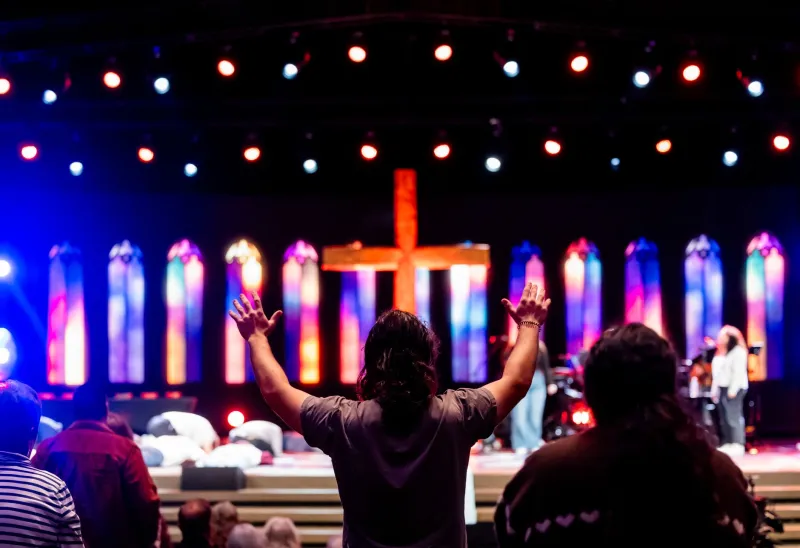
That posture is not accidental. It is cultivated deliberately through the congregation's small group ministries, its pastoral care structures, and a liturgical rhythm that returns, week after week, to the confession of human frailty and the pronouncement of absolution. The order of worship itself rehearses the pattern: honesty about failure, followed by grace freely given.
Restoration Without Naivety
It would be easy to misread First Lutheran OKC's commitment to restoration as an indifference to harm. It is not. The congregation is careful to distinguish between grace and permissiveness, between welcome and the erasure of accountability.
"Restoration is not the same as pretending nothing happened," the pastor notes. "Biblical restoration involves truth-telling. It involves the hard work of repair where repair is possible. What it does not involve is the permanent branding of a person as beyond redemption."
This is where Lutheran theology offers something genuinely distinct from both the cultural left and the cultural right on questions of accountability. It refuses the false choice between "cancel" and "excuse." It insists that human beings are simultaneously capable of causing real harm and of genuine transformation — and that a community's job is to hold both of those realities without collapsing one into the other.
The congregation's approach draws on a long biblical precedent. The Apostle Paul, who by his own account had participated in the persecution of the earliest Christians, became the primary architect of the theology of grace. Peter, who denied knowing Jesus at the moment of greatest crisis, was restored and entrusted with leadership. The biblical narrative is, in no small measure, a record of second chapters.
Living the Theology Out Loud
First Lutheran OKC has made several concrete commitments that reflect this theological posture. The congregation partners with reentry programs serving formerly incarcerated individuals in the Oklahoma City metro area, offering not just material support but genuine community membership. Members volunteer with organizations that assist people navigating the aftermath of public failure — job loss, addiction, the dissolution of public reputation.
The congregation also takes seriously the internal work of creating a culture where people feel safe enough to be honest about their struggles before those struggles become crises. Small groups are structured around vulnerability rather than performance. Pastoral care is proactive rather than reactive.
"We want people to know they can bring the real thing here," says one small group leader. "Not the polished version. Not the version where everything is already resolved. The actual, unfinished, still-messy thing."
A Different Kind of Permanence
The internet does not forget. First Lutheran OKC is betting on something older than the internet — a grace that is equally permanent, and considerably more merciful.
In Lutheran theology, baptism is understood not merely as a moment but as an enduring identity. Whatever else a person becomes or fails to become, the declaration spoken at the font — you are God's own — does not expire. It does not get buried by a bad news cycle or revoked by a poor decision. It remains.
For a congregation in Oklahoma City navigating the same fractured cultural moment as the rest of the country, that permanence is not a retreat from reality. It is an alternative account of what reality actually is — one in which the final word on a human life is not spoken by an algorithm or a public consensus, but by the One who authored that life in the first place.
"We are not naive about what people are capable of," the pastor reflects. "We are simply more committed to what people can become. That is not optimism. That is the gospel."
First Lutheran OKC gathers each Sunday at firstlutheranokc.org, where information about worship services, small groups, and community ministries is available to all who are looking for a place to begin again.