Ancient Rhythms, Radical Presence: Why Gen Z at First Lutheran OKC Is Choosing Liturgy Over the Algorithm
The Scroll That Never Ends
Consider what a typical Sunday morning looks like for a twenty-two-year-old in Oklahoma City. Before rising from bed, the phone is already in hand. Notifications from three platforms. A news cycle that moved overnight. An inbox that accumulated while they slept. Decisions — small, constant, accumulating — before a single word of the day has been spoken aloud.
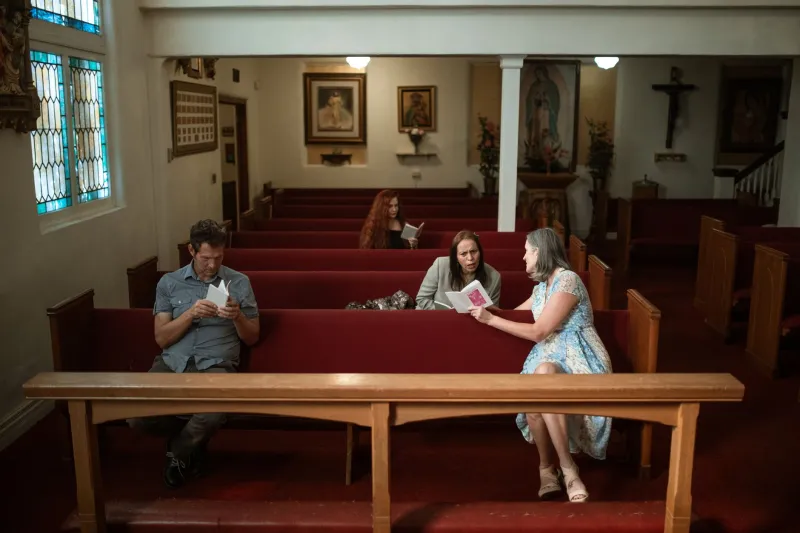
Now consider what happens when that same person walks through the doors of First Lutheran OKC.
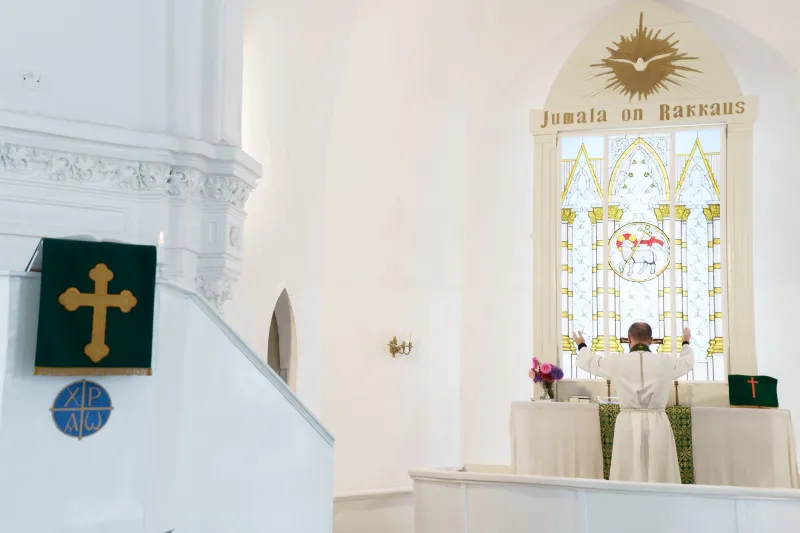
They are handed a bulletin. The order of service is printed. The words they will speak are already there, waiting. The hymns were chosen before they arrived. The liturgy — the Kyrie, the Gloria, the Confession, the Creed — follows a pattern older than the United States, older than the Reformation, older than the printing press that eventually disseminated it.
Nothing on the page is trying to capture their attention. Nothing is optimized for engagement. Nothing will change based on what they click.
For a growing cohort of young adults at First Lutheran OKC, this is not a limitation. It is the entire point.
Predictability as a Spiritual Gift
Lutheran liturgy is, by design, repetitive. The same responses return Sunday after Sunday. The liturgical calendar cycles through the same seasons — Advent, Christmas, Epiphany, Lent, Easter, Pentecost — year after year. Hymns once memorized in childhood resurface in adulthood, carrying the accumulated weight of every previous encounter.
In most contemporary conversations about church growth and relevance, this repetition is framed as a liability. Young people, the conventional wisdom holds, want novelty, energy, and innovation. They want a worship experience that feels current.
The young adults gathering at First Lutheran OKC complicate that narrative significantly.
"I grew up in a church that was constantly reinventing itself to stay relevant," says one twenty-six-year-old who began attending First Lutheran three years ago. "Every week was a new theme, a new series, a new aesthetic. It was exhausting. I didn't realize how exhausting until I sat in a service where I already knew what was coming next, and I could actually be present instead of just processing."
This observation — that predictability enables presence — surfaces repeatedly among younger members of the congregation. When the liturgy carries the cognitive load, the worshiper is freed to inhabit the moment rather than navigate it.
Rebellion in a Robe
There is something quietly subversive about choosing ancient forms in a culture that treats the new as inherently superior. When a twenty-four-year-old chooses to recite the Apostles' Creed alongside words that have been spoken by Christians across continents and centuries, they are making a counter-cultural declaration: that truth does not require novelty, that beauty does not require disruption, that community does not require constant reinvention.
This is not nostalgia. The young adults at First Lutheran OKC are not longing for a past they never inhabited. Many of them grew up in low-church evangelical environments or had minimal religious formation at all. They are not returning to something familiar. They are arriving at something ancient as if for the first time — and finding, to their surprise, that it holds.
"It sounds strange, but the liturgy feels more honest than a lot of contemporary worship," reflects one twenty-nine-year-old member. "When I sing a praise song that's two years old, it already feels dated. When I sing a hymn that's four hundred years old, it feels timeless. There's a difference."
In the vocabulary of digital culture, liturgy offers something algorithms are structurally incapable of providing: an experience designed not to maximize engagement but to form character. The distinction matters enormously.
Formation, Not Consumption
Lutheran liturgical worship operates on an assumption that runs counter to the logic of modern media: that people are not primarily consumers to be satisfied but persons to be shaped. The liturgy does not ask what the worshiper wants. It offers what the worshiper needs — confession, absolution, proclamation, Eucharist — and trusts that the repetition of these gifts, over time, will do its formative work.
This is a long-game approach in a short-attention-span era, and it requires a particular kind of trust. Young adults who stay with it describe a slow but genuine transformation — not the emotional peak of a concert-style worship service, but something quieter and more durable.
"I don't always feel moved during the service," admits one regular attendee in her late twenties. "But I notice that I'm different than I was two years ago. More patient. More grounded. I think the liturgy is doing something to me that I can't always perceive in the moment."
This is, in fact, precisely what Lutheran theology would predict. The Word and Sacraments work not through emotional intensity but through faithful repetition — grace delivered through ordinary means, accumulating across ordinary Sundays.
What Their Presence Means
The gathering of young adults around ancient liturgical forms at First Lutheran OKC is not simply a demographic curiosity. It is a theological statement about what human beings actually need — and what the market, for all its ingenuity, cannot provide.
In a culture saturated with content designed to stimulate, the quiet structure of Lutheran worship offers something rarer: a space where the person in the pew does not have to perform, optimize, or curate their experience. They simply receive.
For a generation that has grown up performing identity online, the invitation to simply show up — week after week, in the same space, with the same words, before the same God — is not a step backward. It is, in the truest sense, a liberation.